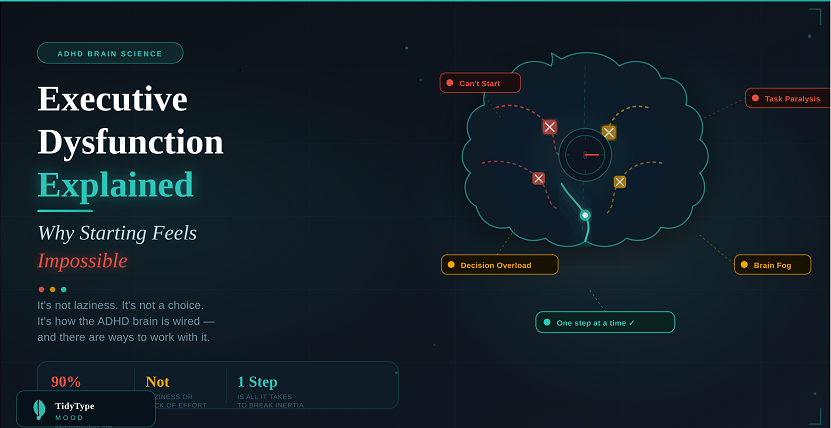
Executive dysfunction is one of the most challenging parts of ADHD.
It affects the brain’s ability to:
- start tasks
- prioritize
- organize
- switch attention
- regulate emotions
- manage working memory
For many adults with ADHD, the problem is not knowing what to do.
The problem is getting started.
Why Simple Tasks Can Feel Impossible
People without ADHD often misunderstand executive dysfunction.
From the outside, it may look like procrastination.
Internally, it feels more like paralysis.
Even small tasks can trigger:
- mental resistance
- overwhelm
- anxiety
- emotional shutdown
The brain struggles to bridge the gap between intention and action.
ADHD Brains Experience Task Friction Differently
Every task contains hidden friction:
- deciding where to start
- remembering steps
- switching focus
- estimating effort
- managing emotions
When too much friction builds up, the brain freezes.
This is why many ADHD adults benefit from:
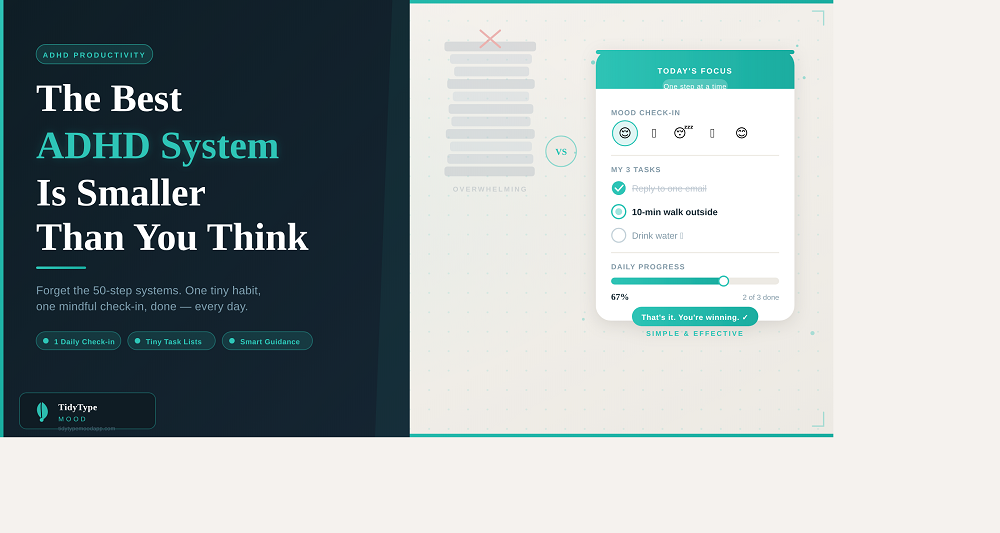
- smaller task lists
- visual simplicity
- low-pressure systems
- quick capture tools
Using an ADHD task management app designed around low friction can reduce resistance significantly.
Why Motivation Alone Doesn’t Work
Many people assume ADHD productivity problems come from lack of motivation.
But ADHD brains often struggle even with tasks they genuinely want to complete.
That’s because executive dysfunction is neurological, not moral.
The issue is not:
- intelligence
- laziness
- ambition
The issue is activation.
The “One Small Task” Approach
Large tasks create overwhelm.
Smaller tasks reduce resistance.
Instead of:
“Clean the entire apartment”
Try:
“Put away three items”
This lowers activation energy and creates momentum.
Many adults with ADHD discover that progress becomes easier once the brain begins moving.
Emotional Regulation Matters Too
Executive dysfunction becomes worse during:
- stress
- burnout
- anxiety
- overstimulation
- emotional exhaustion
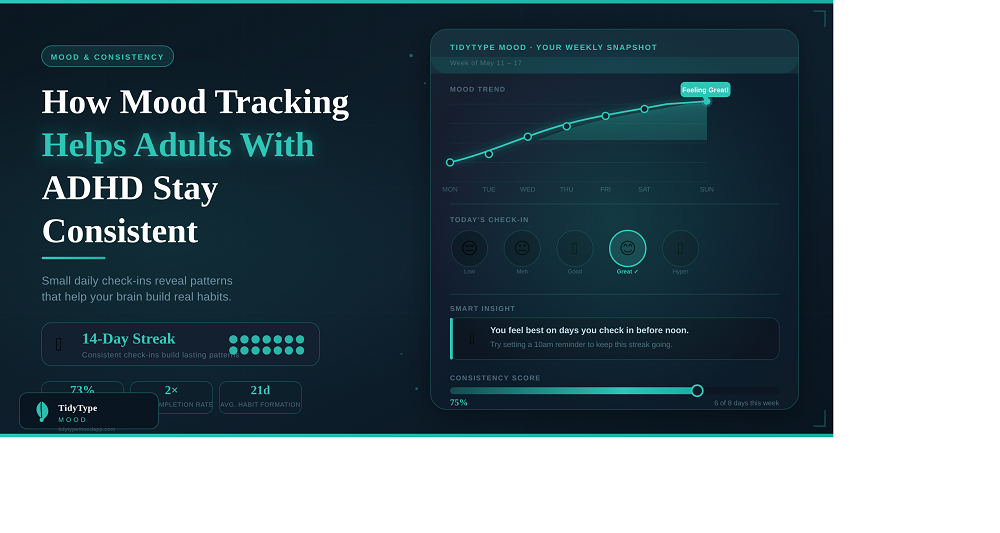
That’s why combining productivity tools with mood tracking for ADHD can improve self-awareness.
Understanding emotional state helps explain why some days feel dramatically harder than others.
How to Reduce Executive Dysfunction Friction
Helpful strategies include:
Reduce decisions
Too many choices create overwhelm.
Use visual simplicity
Clutter increases cognitive load.
Capture tasks quickly
ADHD brains lose thoughts fast.
Focus on small wins
Momentum matters more than perfection.
Create gentle systems
Punishing productivity systems usually fail long-term.
Final Thoughts
Executive dysfunction is one of the most misunderstood ADHD challenges.
The solution is not harsher discipline.
It’s building systems that reduce friction and support the way ADHD brains naturally work.
Tidy Type Mood helps users manage overwhelm with:
- small-step productivity
- lightweight task management
- mood awareness
- ADHD-friendly workflows
- Download on the App Store
- Get it on Google Play
Related reading:
- ADHD and Overwhelm: How to Stop Freezing
- The Best ADHD Productivity System