Many adults with ADHD feel confused by inconsistency.
One day:
- tasks feel manageable
- motivation is high
- focus comes naturally
The next day:
- simple tasks feel impossible
- emotional overwhelm takes over
- everything feels urgent
This inconsistency is frustrating, but it’s also common.
ADHD productivity is heavily influenced by emotional state, stress levels, energy, sleep, and overstimulation.
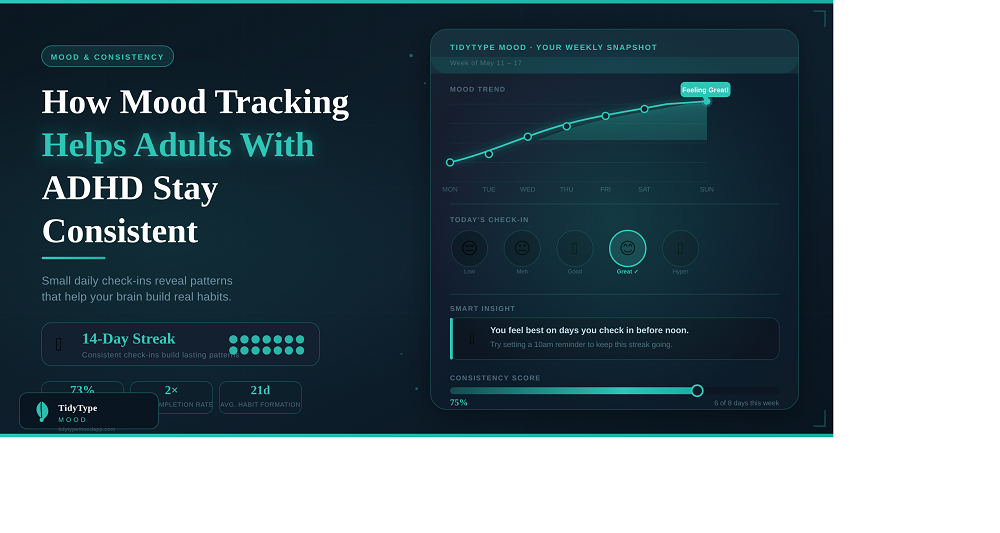
That’s why using mood tracking for ADHD can help people understand patterns instead of blaming themselves.
Mood Directly Affects Executive Function
Executive function controls:
- planning
- prioritization
- focus
- memory
- task initiation
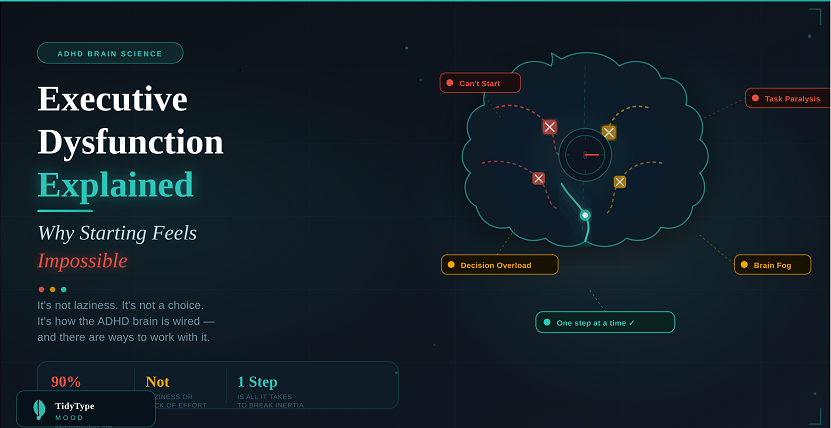
When emotional stress increases, executive functioning often drops.
This creates a cycle:
- overwhelm increases
- productivity decreases
- guilt increases
- stress becomes worse
Mood tracking helps break that cycle by creating awareness.
Instead of thinking:
“Why am I failing again?”
You begin asking:
“What’s affecting my brain today?”
That shift matters.
ADHD Brains Benefit From Pattern Recognition
Tracking mood consistently helps identify triggers such as:
- poor sleep
- overstimulation
- burnout
- social exhaustion
- skipped meals
- unrealistic workloads
Over time, patterns become easier to notice.
For example:
- low mood after back-to-back meetings
- shutdown after long task lists
- focus improvement after shorter work sessions
These insights make it easier to create supportive routines using an ADHD daily planner instead of relying on willpower alone.
Why Mood Tracking Should Be Simple
Many journaling systems fail ADHD users because they demand too much effort.
Long entries and complicated tracking systems become difficult to maintain consistently.
Simple systems usually work better.
An ADHD-friendly mood tracker should:
- reduce friction
- take less than a minute
- support emotional clarity
- connect mood with productivity
- avoid shame-based tracking
Consistency matters more than perfection.
Emotional Awareness Reduces Self-Judgment
Adults with ADHD often grow up internalizing criticism:
- “lazy”
- “careless”
- “inconsistent”
- “unmotivated”
Mood tracking creates evidence that productivity challenges are not random character flaws.
It helps people recognize:
- emotional overload
- nervous system fatigue
- burnout signals
- overstimulation
That awareness can reduce guilt and improve self-compassion.
Productivity Works Better With Emotional Context
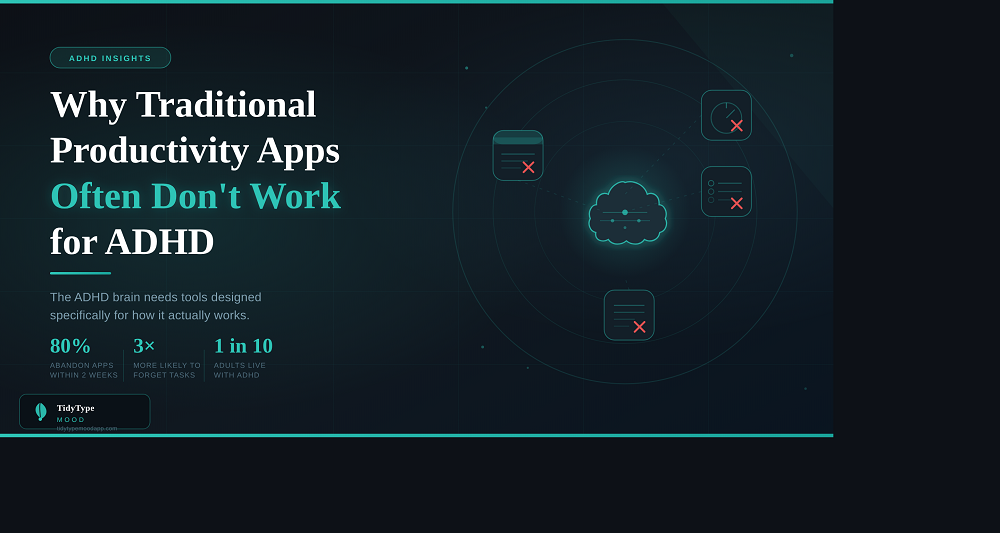
Traditional productivity apps ignore emotional state.
But ADHD productivity is emotional productivity.
That’s why combining:
- task management
- mood tracking
- small-step planning
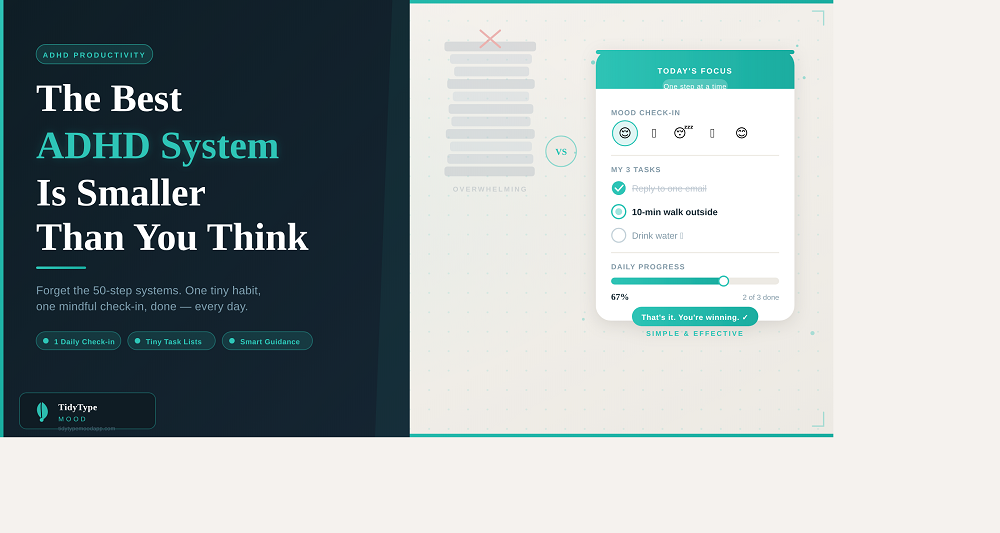
inside one ADHD productivity app creates a more sustainable experience.
The goal is not maximum output every day.
The goal is understanding your patterns and working with your brain more effectively.
Final Thoughts
Mood tracking is not just about emotions.
For many adults with ADHD, it becomes a practical productivity tool.
By recognizing patterns, reducing overwhelm, and improving emotional awareness, mood tracking can make consistency feel more achievable.
Tidy Type Mood combines lightweight task management with mood awareness to help ADHD users stay grounded without adding pressure.
Related reading: