Most productivity apps are designed for organized people.
That’s the uncomfortable truth.
They assume you can:
- remember tasks consistently
- prioritize clearly
- break projects into steps
- stay emotionally regulated
- return to unfinished tasks later
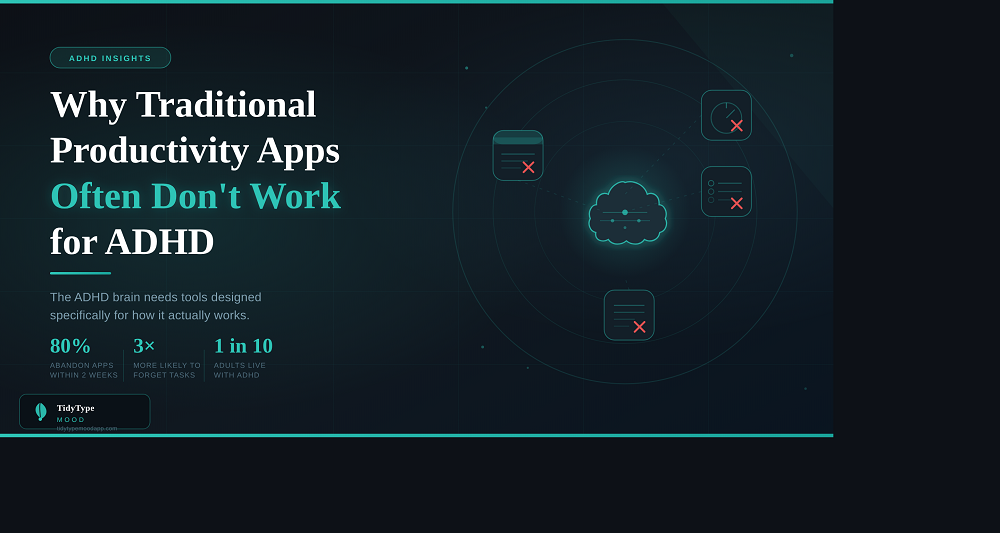
But ADHD brains don’t operate that way.
For many adults with ADHD, the problem is not laziness or lack of ambition. The real issue is friction.
The more steps a system requires, the harder it becomes to use consistently.
That’s why many people:
- download productivity apps enthusiastically
- spend hours organizing them
- abandon them within days
The system becomes another source of guilt instead of support.
A better approach is using an ADHD productivity app designed around how ADHD brains actually function.
ADHD Brains Need Low-Friction Systems
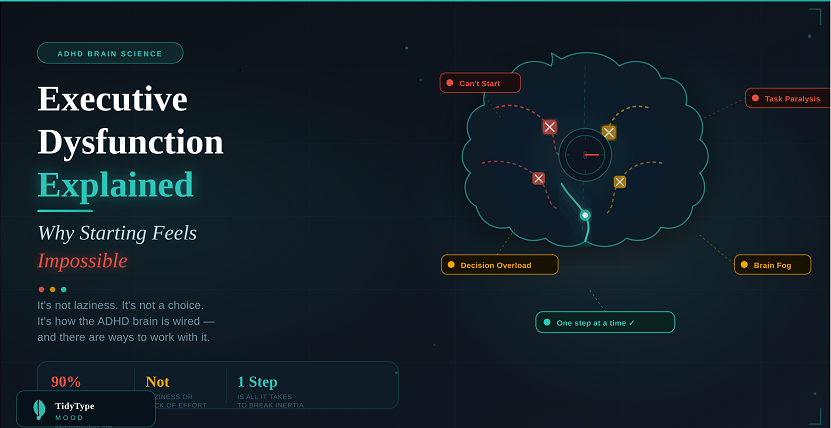
Executive dysfunction affects:
- task initiation
- working memory
- prioritization
- emotional regulation
- attention shifting
When a task manager demands categories, labels, due dates, and folders before saving a thought, it creates cognitive overload.
That’s why simpler systems usually work better.
An ADHD-friendly task manager should help you:
- capture thoughts quickly
- focus on a few priorities
- reduce overwhelm
- reconnect after distractions
- recover without shame
The goal is not perfect organization.
The goal is momentum.
Why Overcomplicated Productivity Systems Fail
Many apps reward complexity:
- endless customization
- large project structures
- productivity dashboards
- complicated workflows
But complexity creates resistance.
ADHD users often benefit more from:
- visual simplicity
- emotional clarity
- supportive prompts
- fewer decisions
- smaller task lists
This is why many adults with ADHD perform better with a lightweight ADHD task management app instead of enterprise-style productivity software.
Mood and Productivity Are Connected
Most task apps ignore emotional state.
That’s a huge mistake.
ADHD productivity is deeply connected to:
- stress
- anxiety
- emotional overload
- sleep
- energy levels
Some days, your brain can manage ten tasks.
Other days, replying to one message feels impossible.
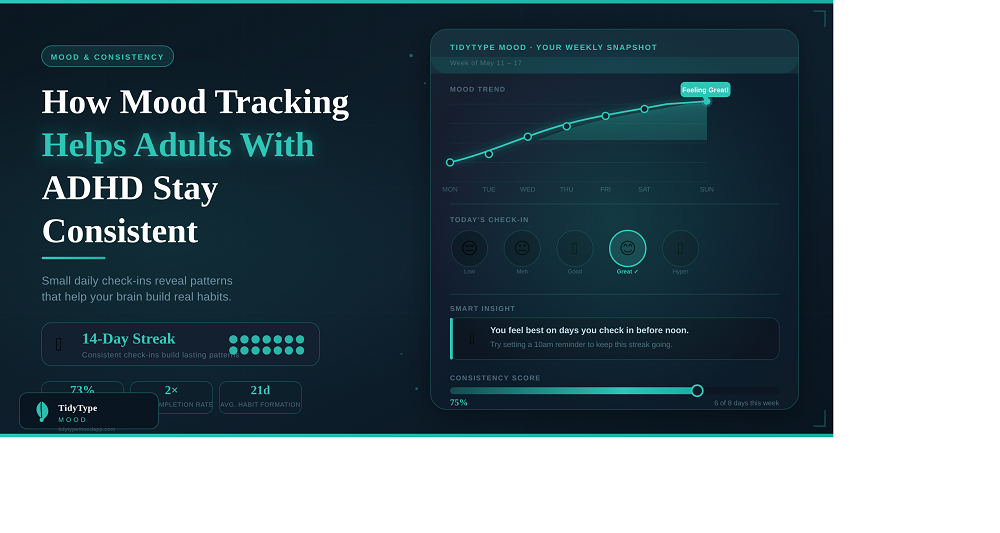
Tracking mood alongside tasks helps users identify patterns and adjust expectations more realistically.
Using tools built for mood tracking for ADHD can reduce self-judgment and improve consistency over time.
Small Wins Matter More Than Perfect Systems
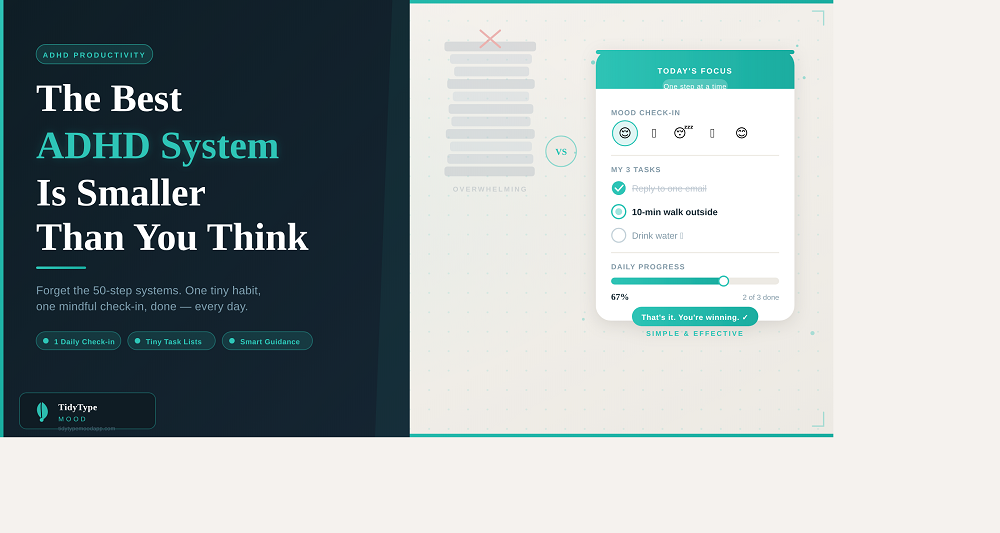
One completed task creates momentum.
That’s why “small-step productivity” works so well for ADHD brains.
Instead of asking:
“How do I organize my entire life?”
Ask:
“What’s the next smallest thing I can do?”
That shift reduces overwhelm and increases action.
Many ADHD adults don’t need more productivity hacks.
They need:
- less pressure
- fewer decisions
- more clarity
- supportive systems
What to Look For in an ADHD To-Do App
The best ADHD-friendly apps usually include:
Quick capture
Fast entry for thoughts and tasks before they disappear.
Simple interfaces
Less visual clutter means less overwhelm.
Mood awareness
Emotional state affects productivity.
Supportive reminders
Gentle nudges work better than aggressive notifications.
Focus on small tasks
Breaking momentum barriers matters more than long-term planning.
Final Thoughts
Most productivity systems fail ADHD users because they prioritize organization over usability.
An effective system should reduce friction, not increase it.
If you’re looking for a simpler <a href=”https://tidytypemoodapp.com/”>daily cockpit for ADHD</a>, Tidy Type Mood helps combine mood tracking, lightweight task management, and small-step productivity into one supportive space.