Modern life moves fast. Between work, personal responsibilities, and digital distractions, it’s easy to ignore how we actually feel during the day. Yet emotional awareness is one of the most important factors for maintaining productivity, mental clarity, and overall well-being.
This is exactly where the Mood Tracking feature in Tidy Type Mood makes a difference.
Instead of overwhelming you with complex journaling or endless tasks, the app focuses on simple, daily emotional check-ins that help you stay aware of how you’re feeling and what might be affecting your mood. If you’re new to the platform, check out our Ultimate Guide to Tidy Type Mood Features to learn about everything the app offers.
In this article, we’ll explore how mood tracking works, why it matters, and how it can improve your daily routine.
Why Mood Tracking Matters
Most people think productivity tools should only focus on tasks and schedules. But in reality, your emotional state strongly influences your productivity, focus, and motivation.
Mood tracking helps you:
-
Understand emotional patterns
-
Identify triggers that affect productivity
-
Improve self-awareness
-
Reduce stress and burnout
-
Build healthier habits
Digital mood-tracking tools are particularly effective because they allow you to log emotions quickly and visualize patterns over time. Many modern wellbeing apps use mood logs and emotional check-ins to help users better understand their daily mental state.
By becoming more aware of how you feel throughout the day, you gain the ability to make small adjustments that lead to better mental health and productivity.
The Mood Tracking Feature in Tidy Type Mood
The Mood Tracking feature in Tidy Type Mood was designed to make emotional awareness simple and accessible.
Unlike complicated journaling apps, the goal here is clarity, not complexity.
The app works as a daily cockpit for adults with ADHD, helping users track mood, manage tasks, and take small steps forward without feeling overwhelmed.
Inside the app, mood tracking is intentionally lightweight and quick to use, so it becomes part of your routine instead of another task on your to-do list.
You can explore more about the platform on the Tidy Type Mood homepage.
How Mood Tracking Works in the App
The process is designed to be simple and fast.
1. Daily Mood Check-Ins
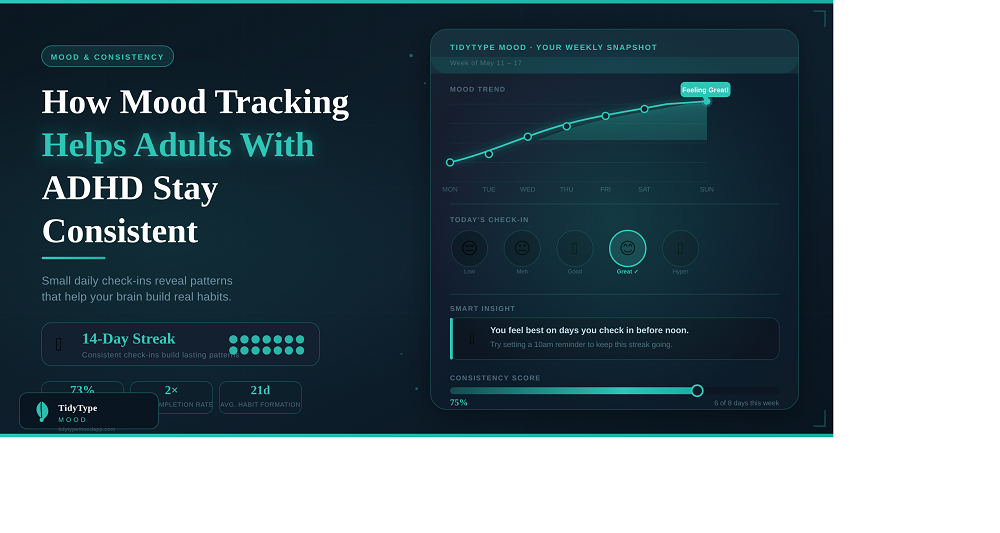
Start by selecting your current mood during the day. This takes only a few seconds but creates a valuable record of your emotional state.
Over time, these check-ins build a timeline that helps you identify patterns.
For example:
-
Are Mondays more stressful?
-
Do certain tasks trigger frustration?
-
Do specific routines improve your mood?
These insights help you adjust your daily habits.
2. Connect Mood with Daily Activities
Mood tracking becomes even more powerful when paired with your daily tasks.
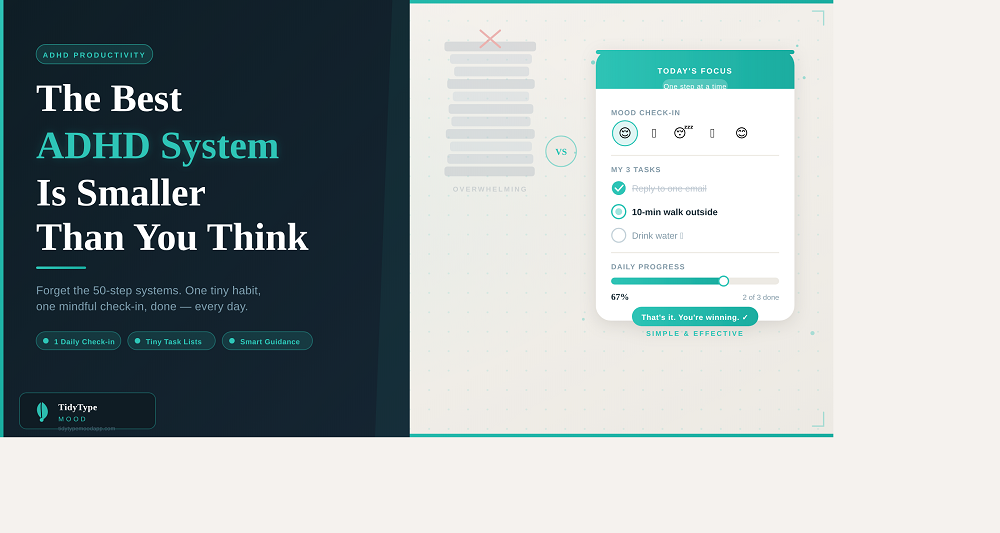
Tidy Type Mood allows you to track your emotional state while managing a small list of important tasks. This helps you understand the relationship between workload and emotional energy.
For example:
You may notice that completing small tasks boosts motivation, while multitasking creates overwhelm.
This is why the app encourages small, achievable steps rather than large task lists.
3. Identify Emotional Patterns
After a few days or weeks of tracking moods, patterns begin to appear.
You might notice:
-
Your focus improves in the morning
-
Stress increases after long meetings
-
Exercise improves your mood
-
Lack of sleep reduces motivation
These insights are powerful because they help you adjust your daily structure intentionally.
Instead of reacting to stress, you can design routines that support your emotional well-being.
4. Build Emotional Awareness
One of the biggest benefits of mood tracking is emotional awareness.
Many people move through their day without stopping to recognize how they feel. But even a quick emotional check-in can change that.
When you pause to record your mood, you create a moment of reflection.
This small habit helps you:
-
Understand emotional triggers
-
Improve self-regulation
-
Make healthier decisions
Over time, these small reflections add up to stronger emotional intelligence.
Why This Feature Is Especially Helpful for ADHD
The app was designed specifically with ADHD users in mind.
People with ADHD often struggle with:
-
Emotional regulation
-
Task overwhelm
-
Productivity consistency
-
Maintaining routines
Tidy Type Mood addresses these challenges with a clean interface and lightweight productivity system that combines mood tracking with simple task management.
Instead of pushing users into rigid productivity systems, the app focuses on small wins and emotional awareness.
This approach makes it easier to stay consistent and avoid burnout.
Tips to Get the Most Out of Mood Tracking
If you’re starting with mood tracking, here are some practical tips to make it more effective.
Be Consistent
Even quick daily entries provide valuable insights over time.
Consistency is more important than detail.
Keep It Simple
Don’t feel pressured to write long journal entries.
A quick mood check-in is enough to start identifying patterns.
Review Your Mood History
Take time to look at your mood patterns every week.
Ask yourself:
-
What activities improve my mood?
-
What situations lower my energy?
-
What habits help me stay balanced?
Combine Mood and Tasks
Use mood tracking alongside your daily tasks.
This helps you understand which types of work energize you and which drain your focus.
Small Awareness Leads to Big Change
Many productivity tools focus only on tasks.
But true productivity isn’t just about doing more — it’s about understanding how you feel while doing it.
The Mood Tracking feature in Tidy Type Mood helps you slow down, reflect, and build better habits through simple daily awareness.
By spending just a few seconds each day checking in with yourself, you gain valuable insights that can transform your routines, productivity, and emotional well-being.
If you haven’t already explored the full capabilities of the app, be sure to read the Ultimate Guide to Tidy Type Mood Features and see how the platform helps you stay organized, focused, and emotionally balanced.
And if you’re ready to start building better daily habits, visit the Tidy Type Mood homepage to learn more.
Frequently Asked Questions (FAQs)
What is mood tracking and why is it important?
Mood tracking is the process of regularly recording your emotional state throughout the day or week. It helps you identify patterns in how you feel and understand what influences your emotions. By tracking moods consistently, you can improve self-awareness, manage stress better, and build healthier daily habits.
How does the Mood Tracking feature in Tidy Type Mood work?
The Mood Tracking feature in Tidy Type Mood allows users to quickly log their emotional state during the day with simple check-ins. Over time, these entries help reveal emotional patterns and connections between mood, daily tasks, and routines, making it easier to improve productivity and emotional well-being.
Can mood tracking help improve productivity?
Yes. Mood tracking helps you understand how your emotional state affects your ability to focus and complete tasks. When you recognize patterns such as stress triggers or activities that boost motivation, you can adjust your routine to improve productivity and avoid burnout.
Is mood tracking helpful for people with ADHD?
Mood tracking can be especially helpful for people with ADHD because it encourages self-awareness and emotional regulation. Apps like Tidy Type Mood combine mood tracking with simple task management to help users stay focused, organized, and emotionally balanced without feeling overwhelmed.
How often should I track my mood?
For best results, it’s recommended to track your mood at least once a day. However, some users prefer checking in multiple times throughout the day to better understand how different activities, environments, or tasks affect their emotional state.
Do I need to write long journal entries for mood tracking?
No. Mood tracking does not require long journal entries. Many apps, including Tidy Type Mood, allow you to log your mood quickly with simple selections or short notes. The goal is to build a consistent habit of emotional awareness rather than detailed journaling.
How long does it take to see patterns in mood tracking?
Most users begin to notice emotional patterns within a few days to a few weeks of consistent tracking. Over time, these insights help identify triggers, habits, and routines that positively or negatively affect mood and productivity.