Staying productive while maintaining good mental health has become a real challenge for many people. Busy schedules, constant notifications, and emotional stress can make it difficult to stay focused throughout the day.
One of the most overlooked factors behind productivity is emotional awareness. When people understand how their mood affects their work, they can manage tasks more effectively and avoid burnout.
Modern digital tools now combine productivity and emotional wellness into a single system. Instead of separating task management and mental wellbeing, these tools help users manage both at the same time.
The Tidy Type Mood App is designed around this idea. It brings together mood tracking, task management, and daily planning to help users stay organized while also supporting mental clarity.
In this guide, we will explore the key features of the platform and how they can improve focus, productivity, and overall mental wellness.
Why Mood Tracking Matters for Productivity
Productivity is not only about how many tasks you complete. It also depends on your mental state.
Your mood influences several aspects of work including:
- focus levels
- decision making
- creativity
- motivation
For example, when someone feels overwhelmed, their ability to concentrate decreases. On the other hand, when they feel calm and motivated, productivity improves.
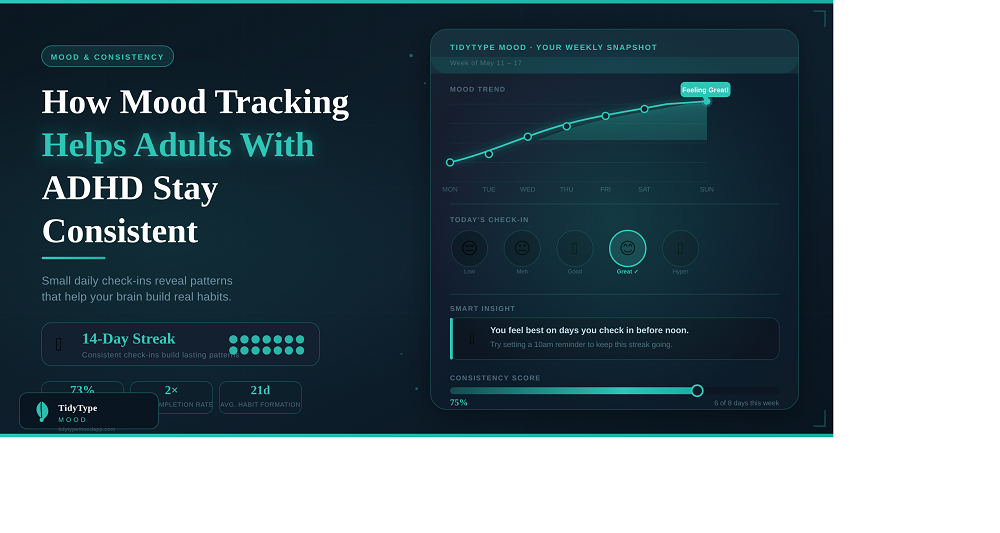
Mood tracking allows individuals to understand these patterns. By observing emotional trends over time, users can adjust their schedules and work habits for better results.
This is why many modern productivity experts recommend combining task management with emotional awareness tools.
Key Tidy Type Mood Features That Improve Daily Productivity
1. Mood Tracking System
One of the most important features of the platform is its simple mood tracking system.
Users can quickly record their emotional state during the day. Over time, this information helps identify patterns between mood and productivity.
Benefits of mood tracking include:
- better emotional awareness
- identifying stress triggers
- understanding productivity patterns
- improving mental clarity
When people see how emotions influence their work habits, they can adjust their routines more effectively.
2. Simple Task Management
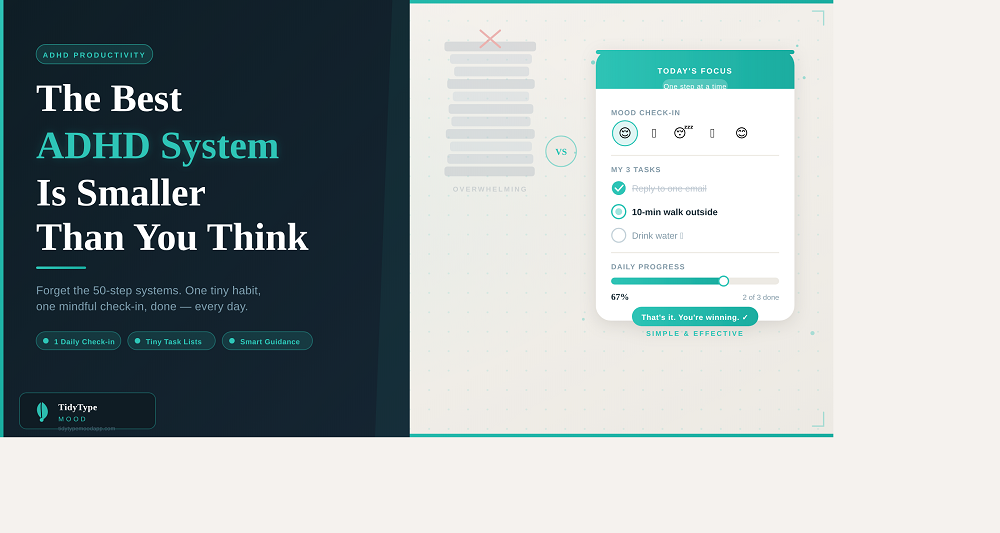
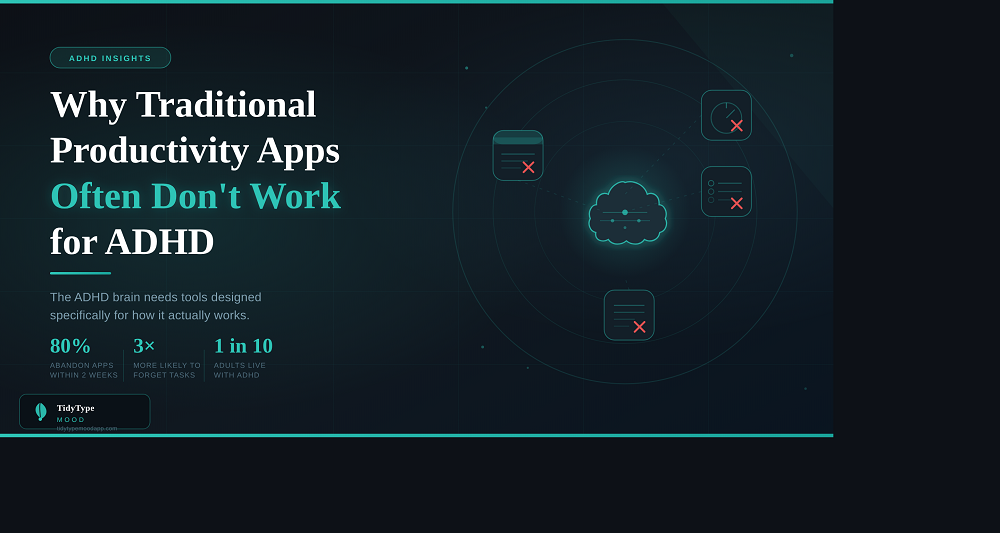
Many productivity apps overwhelm users with complex features and endless task lists. The goal of this platform is to simplify task organization.
The task management system allows users to:
- create clear task lists
- focus on daily priorities
- avoid overloaded schedules
This simple approach helps users concentrate on meaningful work instead of managing complicated productivity systems.
3. Daily Productivity Dashboard
The app includes a central dashboard where users can view their daily activity in one place.
The dashboard typically displays:
- current mood status
- active tasks
- daily priorities
- overall progress
Having everything in one place reduces mental clutter and helps users stay organized throughout the day.
A centralized productivity dashboard also makes it easier to review progress and adjust plans when needed.
4. Gentle Reminders
Many productivity tools rely on constant alerts that can become stressful. This system uses a more supportive approach.
Gentle reminders help users:
- stay aware of tasks
- refocus when distracted
- maintain productivity without pressure
Instead of overwhelming notifications, the reminders act as subtle nudges that keep users on track.
5. Minimal Design for Better Focus
One of the biggest reasons people abandon productivity apps is interface overload.
Complex dashboards, too many buttons, and unnecessary features can create confusion.
A minimal design approach solves this problem by focusing only on essential tools.
Benefits of minimal design include:
- reduced distractions
- faster decision making
- improved user experience
- better focus on important tasks
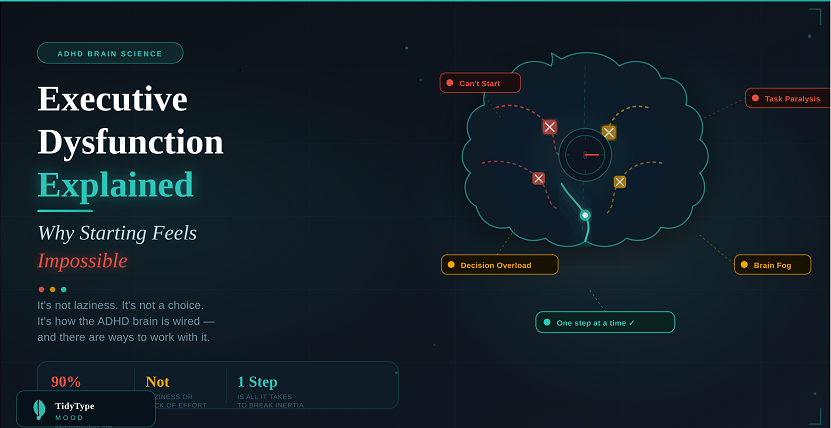
This design style is particularly helpful for individuals who struggle with attention or ADHD related productivity challenges.
How the App Supports Mental Wellness
Mental wellness plays a critical role in productivity. When emotional stress builds up, it can affect concentration and decision making.
Using a mood tracking system alongside task management can support mental wellness in several ways.
Recognizing Emotional Patterns
Tracking mood over time allows users to see emotional trends.
For example, someone might notice that they feel more productive in the morning or experience stress before deadlines.
Understanding these patterns makes it easier to adjust daily routines.
Reducing Overwhelm
When tasks accumulate without structure, it becomes difficult to stay focused.
Combining mood awareness with organized task lists helps reduce mental overload.
Users can prioritize tasks and maintain a balanced workload.
Encouraging Healthy Productivity Habits
Consistent tracking and planning encourage positive habits such as:
- regular reflection
- structured daily routines
- balanced work periods
Over time, these habits improve both productivity and mental wellbeing.
Who Can Benefit from This Type of Productivity Tool
Tools that combine mood tracking and task management can be useful for many people.
Professionals who manage busy schedules can use them to stay organized.
Students can track stress levels while balancing studies and assignments.
Entrepreneurs can monitor productivity patterns and optimize their work routines.
Individuals who struggle with focus or emotional balance may also find these tools helpful for improving daily structure.
Tips for Using Mood Tracking and Task Management Effectively
To get the best results from this type of productivity system, consider the following strategies.
Track mood consistently during the day so patterns become clearer.
Keep daily task lists realistic to avoid unnecessary pressure.
Review emotional patterns weekly to understand productivity trends.
Adjust workloads based on energy levels and mood.
These small adjustments can significantly improve both focus and productivity.
Frequently Asked Questions
What is a mood tracking app?
A mood tracking app helps users record their emotional state throughout the day. Over time, this data helps identify patterns that affect productivity and mental wellbeing.
Can mood tracking really improve productivity?
Yes. Understanding emotional patterns allows people to schedule tasks during their most productive periods and manage stress more effectively.
Who should use a mood tracking productivity app?
Anyone interested in improving focus, organization, and mental awareness can benefit from this type of tool. It can be especially useful for professionals, students, and individuals managing ADHD related challenges.
How often should you track your mood?
Many experts recommend checking in two or three times per day. This provides enough data to understand emotional trends.
Why is emotional awareness important for productivity?
Emotional awareness helps individuals recognize stress triggers, improve decision making, and maintain focus during demanding tasks.
What makes a productivity dashboard useful?
A dashboard organizes tasks, mood insights, and daily priorities into one clear view. This reduces mental clutter and helps users stay organized.
Conclusion
Productivity is not just about managing tasks. It also involves understanding how emotions influence focus, motivation, and decision making.
Combining mood tracking with task organization creates a balanced productivity system that supports both efficiency and mental wellbeing.
Tools like Tidy Type Mood App bring these elements together into a simple and supportive platform designed to help users stay organized, track emotional patterns, and maintain daily focus.