2025 is shaping up to be the year we rethink productivity. For years, the conversation around ADHD has been dominated by challenges: distraction, procrastination, overwhelm. But recently, there’s been a cultural shift — we’re starting to see ADHD as more than just hurdles.
From TikTok trends on “body doubling” to viral content about ADHD-friendly routines, the world is finally realizing that ADHD brains don’t need fixing — they need different systems. And those systems are now inspiring productivity tools for everyone.
Trend 1: Short, Realistic Focus Blocks
The old “sit down for 8 hours straight” productivity mindset is gone. In 2025, micro-sprints are in. ADHD communities pioneered the idea of 10–20 minute focus blocks, and now even major companies encourage employees to work in bursts.
Why it matters: Short blocks make tasks approachable and reduce the fear of starting. For ADHD minds, that’s the difference between staring at a to-do list and actually making progress.
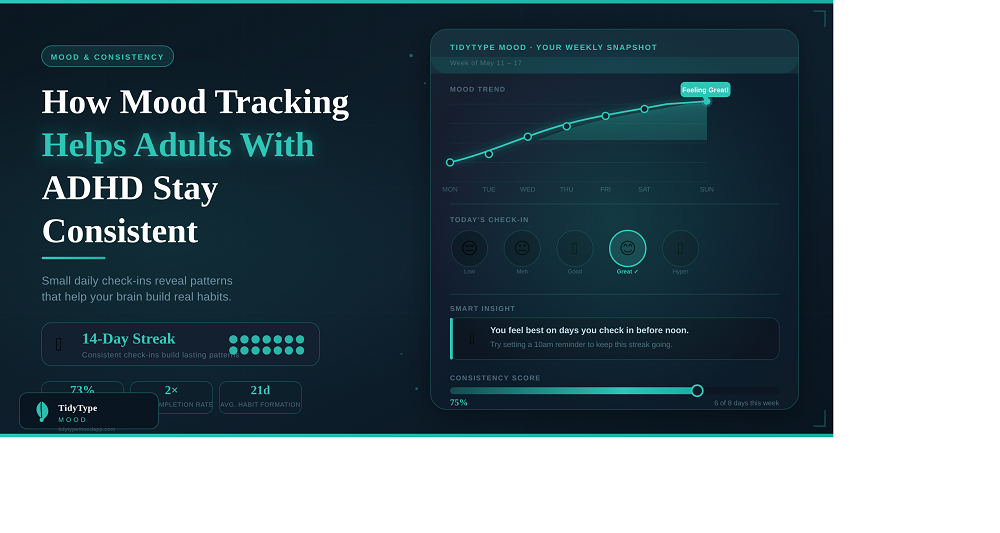
Trend 2: Mood Tracking as a Productivity Tool
Mood journals aren’t just for therapy anymore. Gen Z and Millennials are blending wellness and productivity, recognizing that mood affects everything from focus to motivation.
On social media, “mood check-ins” have gone viral — simple prompts like “How’s your brain today?” are reshaping how we think about work-life balance.
Why it matters: Tracking mood helps ADHD adults connect patterns: maybe mornings are better for focus, or stress spikes in the afternoon. Awareness leads to better planning.
Trend 3: Gentle Tech, Not Overwhelming Dashboards
The rise of “calm tech” is huge in 2025. People are ditching apps that bombard them with notifications, red badges, and endless menus. Instead, they want simple tools with clear, non-judgmental feedback.
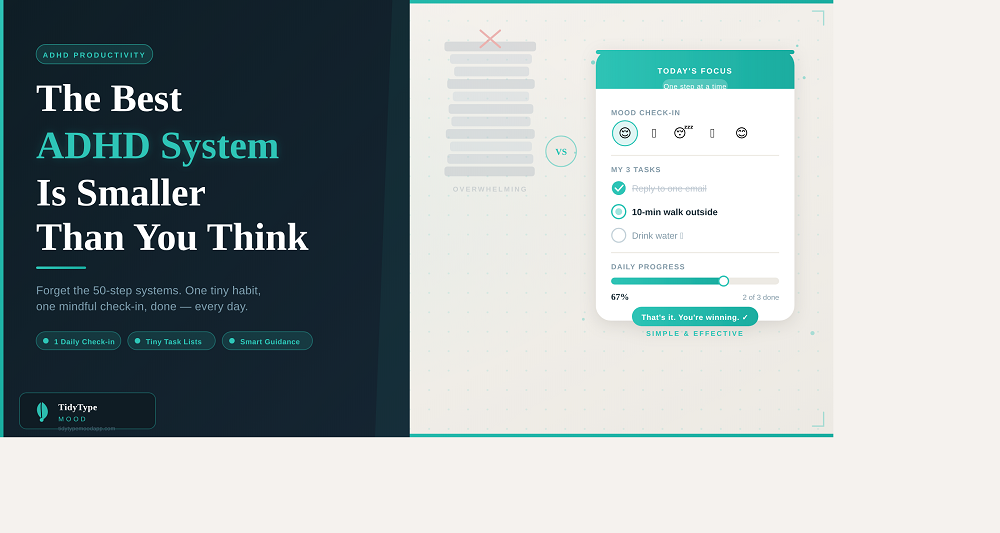
For ADHD specifically, this shift is massive — because overwhelm kills momentum. Tools that say “Do this one small thing right now” are replacing the old-school productivity stacks.
Trend 4: Privacy and Trust Are Non-Negotiable
In the age of AI and data leaks, people want tools that respect their boundaries. ADHD communities, often vulnerable to stigma, are pushing back against apps that treat their data as a commodity.
Why it matters: Privacy-first apps are no longer optional — they’re the new standard. Especially for health-related tools like mood and focus trackers.
Where Tidy Type Mood Fits In
Amid these trends, Tidy Type Mood App emerges as part of the new wave of ADHD-friendly tools. It combines:
- Quick mood check-ins that take less than a minute.
- Simple task lists with short timers instead of endless to-dos.
- Gentle, explainable guidance based on your patterns.
- Privacy-first design, built around the principle: your data is yours.
It’s not just another productivity app — it’s part of a bigger movement toward neurodiverse-friendly, calm, and supportive tech.
Conclusion: The Future Is ADHD-Inspired
The trends of 2025 show us something powerful: what works for ADHD often works for everyone. Short focus blocks, mood-aware planning, calm design, and privacy-first principles are becoming mainstream.
And as more tools like Tidy Type Mood hit the market, we’re not just talking about productivity apps anymore — we’re talking about a cultural shift toward kinder, smarter, ADHD-inspired ways of working.
Want to see what ADHD-friendly productivity looks like in action? Join the waitlist for Tidy Type Mood and be the first to try it.